
Scope of this technical record
Routes Unidrive feedback/encoder instability through encoder supply, shield/ground, option module, direction, cable noise and machine-loop symptoms.
Feedback work can change motion direction or stability. Secure axes and loads before disconnecting encoder or option-module wiring.
Unidrive feedback route
Feedback instability can create current or bus faults that look like power-stage failures.
Unidrive feedback instability image
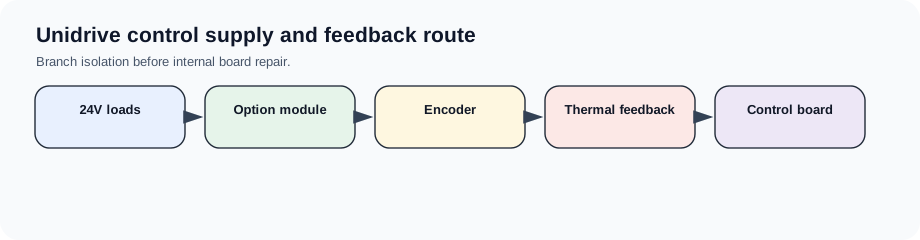
Feedback problems can look like power faults
On a closed-loop Unidrive, feedback noise or direction error can create current trips, speed hunting, overvoltage events or motion instability. The fault may not be the power stack. The first evidence is control mode, encoder type, cable route, shield termination and option-module status.
Feedback evidence matrix
Separate wiring/noise from option-module or control-board suspicion.
Feedback route
| Evidence | Interpretation | Next action |
|---|---|---|
| Wrong direction after work | Phasing/parameter/encoder polarity | Correct configuration before hardware repair |
| Hunting under load | Noise/tuning/load loop | Shield, grounding and tuning review |
| Trip when cable moves | Encoder cable or connector | Cable replacement/reroute |
| Option-module fault | Module or seating | Module evidence |
| Supply missing | 24 V/encoder supply | PS.24V/control-supply route |
Repair boundary
A feedback repair request should include encoder type, option-module label, cable route, shield/ground photos and whether the fault follows the feedback device, module or control board.
Field record checklist
- Control mode
- Encoder type
- Option module
- Cable/shield evidence
- Motion symptom
Technical basis and reference documents
This is an independent editorial technical reference. Original manufacturer documentation remains controlling for installation, repair and commissioning decisions.
User-guide reference for Unidrive installation and feedback/trip-log context.
Diagnostic workflow
Turn this record into a qualified service request
A repair decision is much more reliable when the request includes the exact identity of the drive, the first fault evidence and the machine condition when the symptom appeared.
- Complete drive type code / MLFB or nameplate model
- Fault code, fault value and first event before reset
- When the event appears: power-up, enable, ramp, run, decel or stop
- Motor/cable connected or isolated during the symptom
- Visible board, option-card, module and connector identifiers
- Previous repair history, replacement parts and repeat-failure pattern