
Scope of this technical record
Step-by-step workflow for Unidrive Over Volts trips during deceleration, lowering, stopping, winder operation or feedback hunting.
Regenerative loads and brake circuits are hazardous. Secure the load and verify DC-bus discharge before access.
Unidrive Over Volts workflow route
The workflow captures the energy source before chopper or board conclusions.
Unidrive Over Volts workflow image
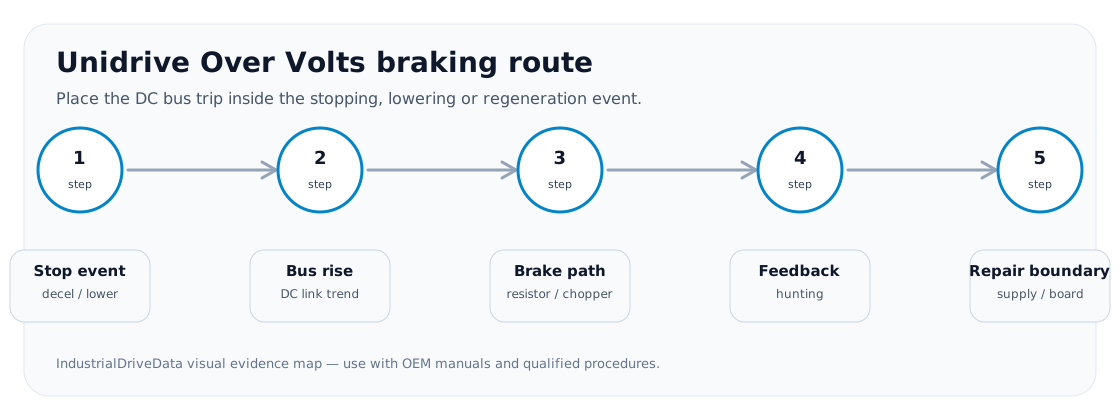
Workflow goal
The workflow separates line-voltage events from regenerated-energy events and separates brake hardware from feedback instability. This is critical on hoists, winders and closed-loop machines.
Step sequence
Over Volts should be correlated with the machine event.
Over Volts workflow
| Step | Action | Evidence |
|---|---|---|
| 1 | Record when the trip occurs | Decel, lowering, stop, steady run or hunting |
| 2 | Check load energy and ramp | Inertia/regeneration route |
| 3 | Inspect brake resistor/chopper | Dissipation path |
| 4 | Check line voltage and bus feedback | Supply or sensing route |
| 5 | Check feedback stability | Encoder/noise route if bus pumps during hunting |
Output package
The close-out record should say whether the root path is ramp/load, brake resistor, chopper, bus sensing, line voltage or feedback hunting.
Field record checklist
- Trip event
- Load/ramp
- Brake path
- Bus evidence
- Feedback stability
Technical basis and reference documents
This is an independent editorial technical reference. Original manufacturer documentation remains controlling for installation, repair and commissioning decisions.
Public reference for Over Volts and bus trip context.
Linked records
The DC bus exceeded its trip boundary, commonly due to regenerative energy, ramp/brake configuration, braking resistor/chopper issues, line voltage or feedback-induced instability.
Routes Over Volts evidence through line voltage, DC bus, load regeneration, deceleration ramp, brake resistor, brake chopper and feedback-induced instability.
Turn this record into a qualified service request
A repair decision is much more reliable when the request includes the exact identity of the drive, the first fault evidence and the machine condition when the symptom appeared.
- Complete drive type code / MLFB or nameplate model
- Fault code, fault value and first event before reset
- When the event appears: power-up, enable, ramp, run, decel or stop
- Motor/cable connected or isolated during the symptom
- Visible board, option-card, module and connector identifiers
- Previous repair history, replacement parts and repeat-failure pattern