
Scope of this technical record
Evidence record for Danfoss VLT brake-chopper, brake-transistor and braking-resistor decisions where overvoltage during deceleration must be separated from line voltage, ramp, load inertia and thermal installation issues.
This record is not an instruction to probe live brake circuits. Brake hardware and DC-link nodes must be treated as high-energy areas and handled only after qualified isolation and discharge verification.
Danfoss brake evidence request route
The record prevents a vague overvoltage request from becoming a wrong resistor or premature board repair.
Danfoss VLT brake evidence record
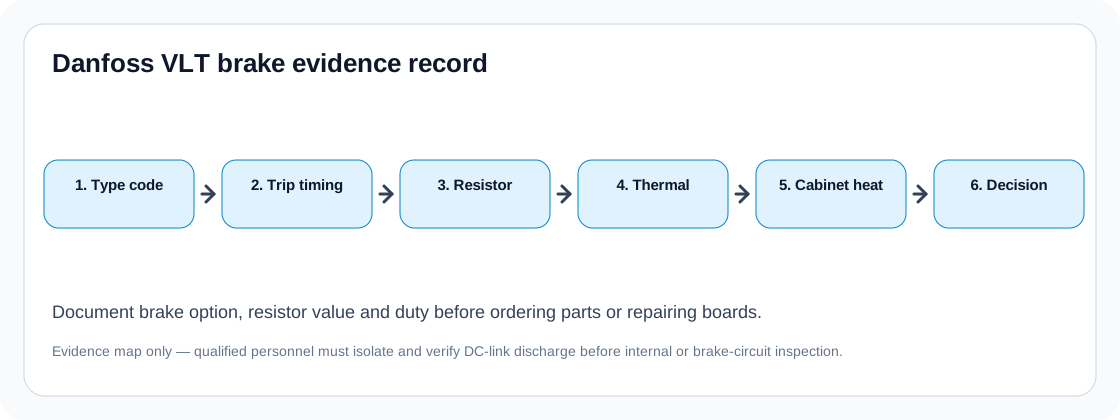
What this evidence record prevents
A deceleration-overvoltage case can generate three bad requests: sell me any braking resistor, repair the board without load evidence, or replace the drive because it trips during stop. This record prevents those shortcuts by forcing the physical brake path and the machine duty into the same support package.
The goal is to decide whether the case needs parameter/ramp work, a correctly specified brake resistor, thermal relocation, brake-chopper repair, or DC-link sensing investigation.
Photographs and measurements that matter
Useful photos show the drive type code, brake terminals, resistor label, resistor mounting, thermal-contact wiring and the cabinet airflow route. Useful measurements include input voltage and resistor ohms after safe isolation. The report should also state whether the resistor is inside the cabinet or mounted externally, because heat management changes the decision.
- Drive type code, frame and voltage class
- Brake terminal wiring and option identity
- Resistor label, ohms and duty rating if available
- Thermal contact wiring and current state
- Cabinet heat, airflow and resistor placement
- Trip timing before and after ramp change
Repair versus redesign boundary
If the resistor is wrong, disconnected or overheated, the repair path stays outside the drive until the brake package is corrected. If the hardware is correctly specified and installed but the drive never commands braking, the case can move toward brake-chopper or control evidence. If the stop requirement exceeds the drive/brake package capability, the right answer may be system redesign rather than component replacement.
Field record checklist
- Type code / frame / voltage class
- Alarm 7 or overvoltage timing
- Brake resistor and option evidence
- Input and ramp evidence
- Thermal and cabinet placement evidence
- Previous brake or board replacement history
Technical basis and reference documents
This is an independent editorial technical reference. Original manufacturer documentation remains controlling for installation, repair and commissioning decisions.
Defines Alarm 7 / DC-link overvoltage checks around input phase-to-phase voltage and regenerative voltage from the motor end.
Describes brake-resistor function as absorbing brake power generated in regenerative braking and supports the brake-energy route used here.
Explains why external brake-resistor placement can improve heat handling, duty-cycle selection and braking-energy dissipation.
Linked circuit records
Routes a Danfoss VLT deceleration-overvoltage case through regenerated load energy, ramp settings, DC-link rise, brake-chopper availability, resistor value, resistor thermal contact, wiring and hardware repair boundary.
Routes Alarm 4, undervoltage and deceleration overvoltage through the same energy path: L1/L2/L3 input, fuses, contactor, rectifier, DC-link capacitors, brake chopper, braking resistor and DC-link voltage feedback.
Turn this record into a qualified service request
A repair decision is much more reliable when the request includes the exact identity of the drive, the first fault evidence and the machine condition when the symptom appeared.
- Complete drive type code / MLFB or nameplate model
- Fault code, fault value and first event before reset
- When the event appears: power-up, enable, ramp, run, decel or stop
- Motor/cable connected or isolated during the symptom
- Visible board, option-card, module and connector identifiers
- Previous repair history, replacement parts and repeat-failure pattern