
Scope of this technical record
F0003 undervoltage when the MICROMASTER drive loses DC-bus credibility at power-up, during contactor operation or while other plant loads start.
Undervoltage does not mean the drive is safe. The DC link can retain hazardous charge even after an F0003 trip or panel reset.
MICROMASTER F0003 undervoltage route
F0003 begins at the drive input terminals and only then moves inward to precharge or bus-sense evidence.
F0003 supply and precharge map
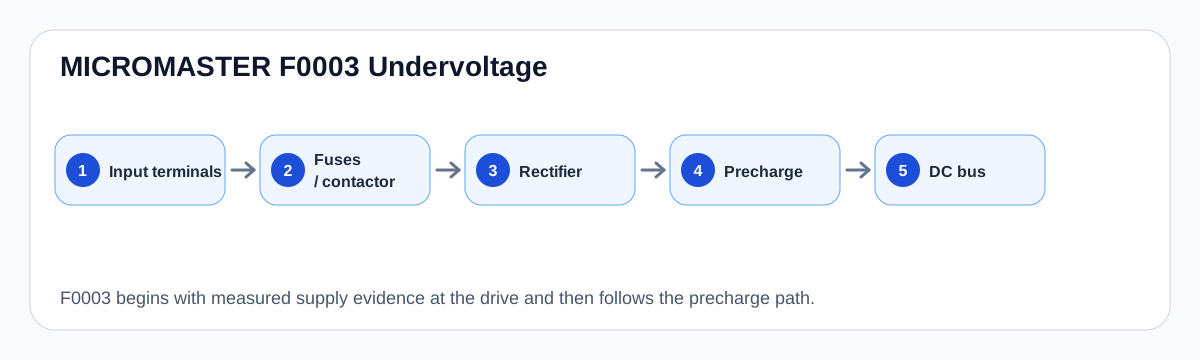
Start outside the drive
F0003 must begin at the drive input terminals, not at the plant distribution board. A weak contactor pole, fuse holder, loose terminal, single-phase loss or brownout can create the same DC-bus result as an internal precharge fault.
If the keypad or control electronics reset with the fault, preserve that observation. It helps separate an input/precharge energy problem from a local measurement or parameter issue.
F0003 first checks
| Evidence | Interpretation | Next step |
|---|---|---|
| Voltage missing at drive input | External supply or contactor boundary | Fix supply path first |
| Input present, no credible DC-bus charge | Rectifier/precharge/capacitor path | Qualified internal route |
| DC bus charges then collapses under load | Weak supply, capacitor ageing or load event | Record timing and load |
| Panel resets with the event | Control supply affected by bus/input event | Preserve display timing |
Precharge and repair boundary
Once external line evidence is clean, the route moves to rectifier, precharge element, DC-link capacitor bank and bus measurement. A repair request should include whether the drive charges the bus, whether a precharge relay/contact event is heard, and whether the fault follows a long idle period or an intermittent plant dip.
Do not replace the control board before the input and DC-link path is proven. F0003 is an energy-path question first.
Field record checklist
- Measured line voltage at drive terminals
- Fuse/contactor evidence
- Panel reset timing
- DC-bus charge behaviour
- Precharge event evidence
- Plant brownout/load-start history
Technical basis and reference documents
This is an independent editorial technical reference. Original manufacturer documentation remains controlling for installation, repair and commissioning decisions.
OEM operating material used for MICROMASTER 430 safety, fault and commissioning context.
Manufacturer reference for parameter, fault and alarm routing around the MM4 platform.
Diagnostic workflow
Turn this record into a qualified service request
A repair decision is much more reliable when the request includes the exact identity of the drive, the first fault evidence and the machine condition when the symptom appeared.
- Complete drive type code / MLFB or nameplate model
- Fault code, fault value and first event before reset
- When the event appears: power-up, enable, ramp, run, decel or stop
- Motor/cable connected or isolated during the symptom
- Visible board, option-card, module and connector identifiers
- Previous repair history, replacement parts and repeat-failure pattern