
Scope of this technical record
Defines the evidence package for PowerFlex HIM/DPI port-loss cases before replacing HIM, cable, adapter or control-board hardware.
Document command-source and safety implications before changing or bypassing port-loss behaviour.
PowerFlex DPI/HIM evidence route
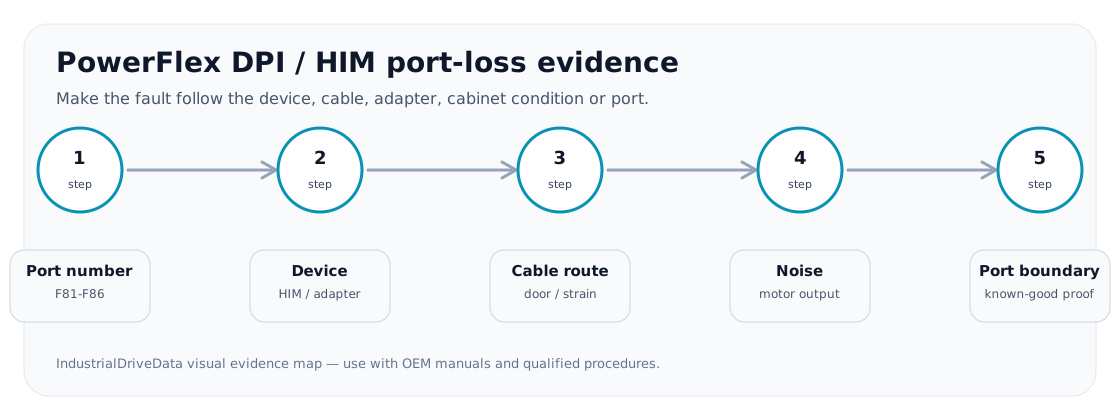
The evidence record captures port-loss facts before replacing a HIM, cable, adapter or board.
PowerFlex DPI/HIM evidence image
Evidence package
The record should show the exact port, device, cable route, door movement sensitivity, adapter identity and noise environment. For networked systems, include controller state or adapter diagnostics at the time of the trip.
- Exact F81-F86 code
- HIM or adapter model
- Cable path and connector photos
- Cabinet grounding/noise evidence
- Fault-follows-device test result
Close-out
The final action should specify whether the fault followed the device, cable, adapter, installation noise or internal port. Without that split, a replacement HIM or drive may not solve the production fault.
Field record checklist
- Port number
- Device/cable identity
- Noise route
- Fault-following evidence
- Command-source impact
Technical basis and reference documents
This is an independent editorial technical reference. Original manufacturer documentation remains controlling for installation, repair and commissioning decisions.
OEM reference for drive interface and wiring context.
Linked circuit records
Turn this record into a qualified service request
A repair decision is much more reliable when the request includes the exact identity of the drive, the first fault evidence and the machine condition when the symptom appeared.
- Complete drive type code / MLFB or nameplate model
- Fault code, fault value and first event before reset
- When the event appears: power-up, enable, ramp, run, decel or stop
- Motor/cable connected or isolated during the symptom
- Visible board, option-card, module and connector identifiers
- Previous repair history, replacement parts and repeat-failure pattern