
Scope of this technical record
Maps the PowerFlex output-current and ground-fault route from output bridge and current sensing through output terminals, cable, motor and protective earth evidence.
Disconnect the motor/cable correctly before insulation testing. Do not test through the drive output bridge.
PowerFlex output current / ground path
The path connects F12 and F13 to field evidence before drive-side repair.
PowerFlex output current and ground path image
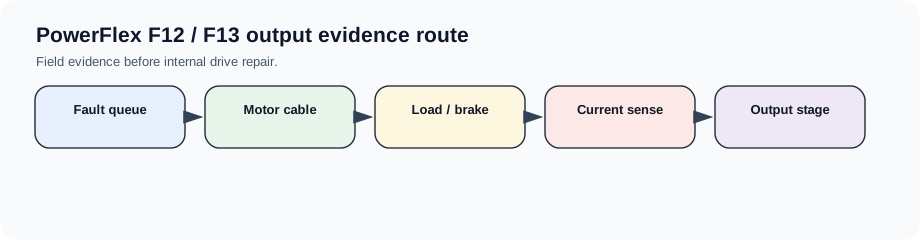
What belongs on the output path
The output-current path is the common physical route for F12 and F13. It includes the inverter bridge, current-sense feedback, U/V/W terminals, motor cable, motor terminal box, motor winding, shield/ground termination and any output accessory such as contactors, filters or reactors.
A circuit-path page helps users collect evidence along the route instead of treating F12 or F13 as a single component diagnosis.
Path evidence table
Each segment tells a different story. The repair boundary changes as evidence moves from motor/cable toward internal sensing.
PowerFlex output path
| Segment | Failure clue | Repair implication |
|---|---|---|
| Motor terminal box | Moisture, tracking, loose lugs | External fault; drive repair stops |
| Motor cable | Insulation drop, movement-sensitive trip | Cable repair/replacement |
| Output terminals/accessories | Contactor/filter/reactor evidence | Installation route |
| Current sensing | Impossible/biased current evidence | Internal evaluation |
| Output bridge/gate driver | Trip persists after field proof | Board/module repair request |
Field record checklist
- U/V/W path
- Motor cable insulation
- Output accessories
- Current-sense behaviour
- Power-stage evidence
Technical basis and reference documents
This is an independent editorial technical reference. Original manufacturer documentation remains controlling for installation, repair and commissioning decisions.
OEM reference for output wiring and safety context.
Turn this record into a qualified service request
A repair decision is much more reliable when the request includes the exact identity of the drive, the first fault evidence and the machine condition when the symptom appeared.
- Complete drive type code / MLFB or nameplate model
- Fault code, fault value and first event before reset
- When the event appears: power-up, enable, ramp, run, decel or stop
- Motor/cable connected or isolated during the symptom
- Visible board, option-card, module and connector identifiers
- Previous repair history, replacement parts and repeat-failure pattern