
Scope of this technical record
Speed-feedback path for tachometer, encoder or armature-voltage feedback evidence before CUD1 input conclusions.
Qualified personnel only.
6RA70 tachometer feedback path
The signal path must be credible before speed-loop work.
6RA70 tachometer feedback path
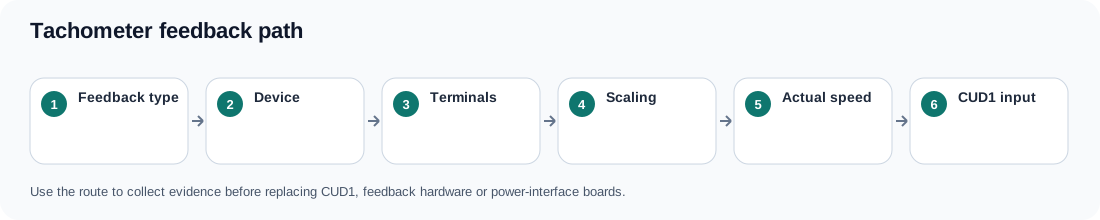
What the path separates
The path starts at selected feedback source and mechanical coupling, then moves through signal polarity, scaling, cable, shield, terminals and actual-speed behavior before CUD1 input evidence.
Field record checklist
- Feedback type
- Coupling
- Signal at source
- Signal at terminal
- Polarity
- Scaling
- Actual speed
Technical basis and reference documents
This is an independent editorial technical reference. Original manufacturer documentation remains controlling for installation, repair and commissioning decisions.
OEM troubleshooting reference for 6RA70 fault values, tachometer checks, CUD1 / power-interface context and optimization-run faults.
Base operating and commissioning context for SIMOREG DC-MASTER converters, parameterization and speed-sensing setup.
Turn this record into a qualified service request
A repair decision is much more reliable when the request includes the exact identity of the drive, the first fault evidence and the machine condition when the symptom appeared.
- Complete drive type code / MLFB or nameplate model
- Fault code, fault value and first event before reset
- When the event appears: power-up, enable, ramp, run, decel or stop
- Motor/cable connected or isolated during the symptom
- Visible board, option-card, module and connector identifiers
- Previous repair history, replacement parts and repeat-failure pattern